What Are Trend Lines in Forex Analysis?
When it comes to forex analysis, trend lines are an essential tool used by traders to identify and analyze market trends. By drawing lines on a price chart that connect consecutive highs or lows, traders can gain valuable insights into the direction of price movements and potential areas of support and resistance. In this article, we will explore the concept of trend lines in forex analysis and how they can be effectively used in trading strategies.
Understanding Trend Lines
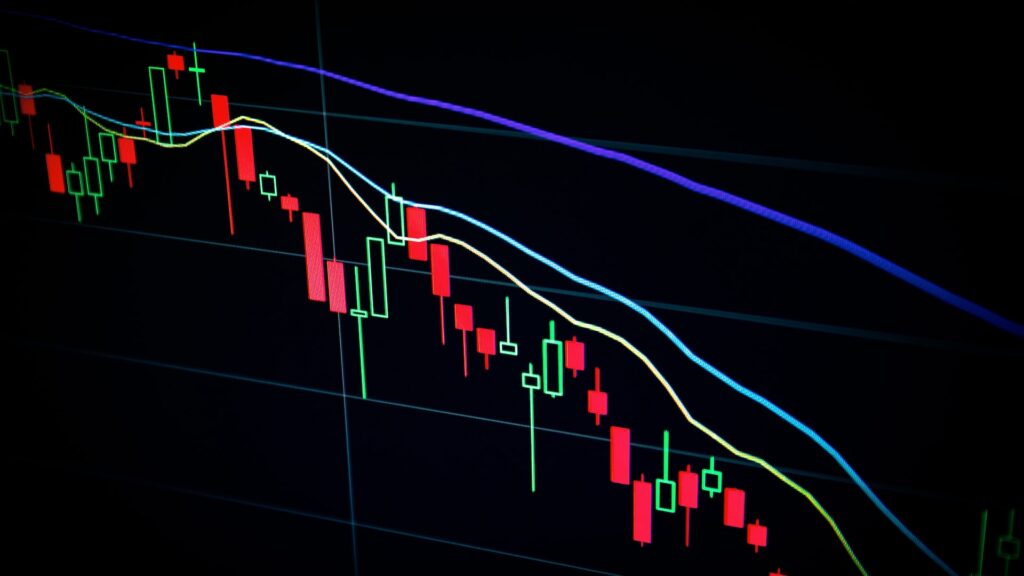
Trend lines are graphical representations of price trends in forex markets. They provide a visual representation of the overall direction in which a currency pair is moving. Trend lines are drawn by connecting a series of higher lows in an uptrend or lower highs in a downtrend.
There are two main types of trend lines:
- Uptrend Line: An uptrend line is drawn by connecting a series of higher lows. It indicates that the market is in an upward trend, with buyers exerting more control and pushing prices higher.
- Downtrend Line: A downtrend line is drawn by connecting a series of lower highs. It indicates that the market is in a downward trend, with sellers exerting more control and pushing prices lower.
How to Draw Trend Lines
Drawing trend lines requires identifying significant highs and lows on a price chart. Here’s a step-by-step guide:
- Identify an uptrend or downtrend by observing higher lows or lower highs respectively.
- Select two or more significant highs or lows depending on the trend.
- Draw a straight line that connects these points, extending it into the future.
- Ensure that the line touches as many significant points as possible without excessively deviating from the trend.
It’s important to note that trend lines are subjective and can vary depending on the trader’s interpretation. However, with practice and experience, traders can develop a better understanding of drawing accurate trend lines.
Utilizing Trend Lines in Forex Analysis
Trend lines offer valuable insights into potential areas of support and resistance, trend reversals, and continuation patterns. Here are some ways traders utilize trend lines in forex analysis:
1. Support and Resistance Levels
Trend lines can act as dynamic support and resistance levels. In an uptrend, the trend line often acts as a support level, where traders look for buying opportunities. Conversely, in a downtrend, the trend line acts as a resistance level, where traders consider selling opportunities.
2. Breakouts and Pullbacks
Breakouts occur when price breaks above or below a trend line, indicating a potential trend reversal or continuation. Traders often look for confirmation through other technical indicators before entering trades based on trend line breakouts.
Pullbacks, also known as retracements, occur when price temporarily moves against the trend but then resumes its original direction. Traders may use trend lines to identify potential areas for pullbacks and enter trades at favorable prices.
3. Trend Reversals
When a trend line is broken, it can signal a potential trend reversal. Traders watch for such breaks as they may indicate a shift in market sentiment and provide opportunities to enter trades in the opposite direction.
Conclusion
Trend lines are a powerful tool in forex analysis, providing traders with insights into market trends, potential areas of support and resistance, and trend reversals. By mastering the art of drawing trend lines and understanding their significance, traders can make more informed trading decisions. It’s important to remember that trend lines should be used in conjunction with other technical analysis tools and indicators to validate trading signals and manage risk effectively.